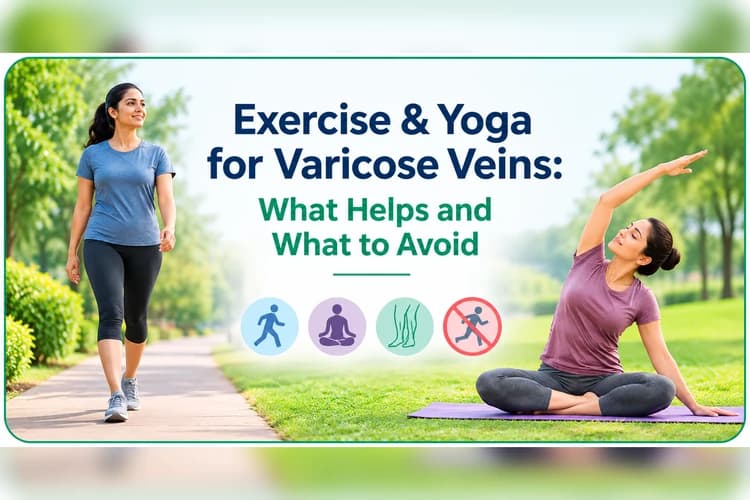
Exercise & Yoga for Varicose Veins: What Helps and What to Avoid
By the end of a long workday, your legs feel heavy, your ankles look a little puffy and the veins on your calves seem more visible than they were a year ago. Then comes the worry: should you keep walking, go to the gym or try yoga, or will movement make things worse?
Quick answer: Most people with varicose veins can stay active. Walking, ankle movements and calf raises may help ease discomfort for some people, but exercise does not repair damaged vein valves or remove established varicose veins. If you have significant swelling, skin changes or persistent pain, get individual medical advice first.
That is why exercise for varicose veins is a sensible part of everyday care, though not a cure. This guide explains what is happening inside the veins, which movements are commonly suitable, how to approach yoga, what to modify and when to seek medical advice.
Understanding Varicose Veins and How They Affect Leg Circulation
Varicose veins are veins under the skin that have become widened, twisted and often visible, most commonly in the legs. Many people have them without any other problem, while others notice symptoms such as aching, heaviness, itching or swelling around the ankles.
Veins must carry blood back up to the heart against gravity. Two things make this possible. Small one-way valves inside the veins open to let blood flow upward and close to stop it falling back. And the calf muscles act as a pump: each contraction squeezes the deep veins and pushes blood upward. This is the calf-muscle pump [3].
When valves in the superficial veins (the ones close to the skin) do not close properly, some blood leaks backward. Doctors call this venous reflux [1]. Blood collects in the lower-leg veins, pressure rises, and the vein walls can stretch, which is why the veins look enlarged and twisted. The wider term for long-standing vein problems of the legs is chronic venous disease.
Common symptoms, often worse by evening, include aching or heaviness in the legs, ankle swelling, itching or burning over the veins and visible bulging veins. Appearance does not predict symptoms: some people have large veins and little discomfort. In some people, long-standing venous disease also causes skin discolouration, eczema-like changes or ulcers around the ankle. These signs need medical assessment rather than exercise alone.
Staying in one position for long periods gives the calf-muscle pump little to do. People who sit at desks or stand all day, such as shop staff, teachers, tailors and security guards, often report more leg heaviness, and avoiding long spells of standing still is commonly advised [6]. Age, family history, pregnancy and weight also play a part.
Is Exercise Good for Varicose Veins?
Yes, in most cases regular, comfortable movement is considered helpful for leg health, and people with varicose veins are generally not advised to stop exercising. When the calf and ankle muscles work, they help move blood towards the heart; when they stay still for hours, blood has more opportunity to pool in the lower legs.
The research is encouraging but modest. A Cochrane review of exercise in people with chronic venous insufficiency without ulcers found only five small randomised trials with 146 participants and rated the certainty of the evidence as low or very low [3]. A 2021 systematic review concluded that exercise training improved calf-pump function, muscle strength and ankle movement [4], and a meta-analysis found better calf-pump ejection (the amount of blood pushed out with each contraction) [5]. The 2021 review noted that many studies lacked control groups or combined exercise with compression, and both reviews call for larger studies.
Put simply, exercise appears to help the calf-muscle pump work better. These trials do not establish a best exercise programme, and they do not show that exercise stops varicose veins from progressing.
| Exercise may support | Exercise does not |
|---|---|
| Calf-muscle activity | Repair damaged vein valves |
| Regular lower-leg movement | Close a refluxing vein |
| Comfort for some people | Remove established bulging veins |
| General fitness | Replace assessment or indicated treatment |
Best Exercises for Varicose Veins
There is no single programme that suits everyone. These movements use the calf and ankle muscles. Start gently, stay within a comfortable range and adjust to how your legs feel.
| Exercise | Main purpose | How to start | When to modify |
|---|---|---|---|
| Walking | Activates calf muscles | Short, comfortable walks | Ease the pace if discomfort increases |
| Ankle pumps | Keeps ankles and calves moving | Slow repetitions while seated | Do not force painful movement |
| Calf raises | Strengthens calf muscles | Use a wall or chair | Try seated raises if balance is difficult |
| Stationary cycling | Repeated leg movement | Low resistance | Reduce resistance if symptoms worsen |
| Swimming | Low-impact activity | Short, easy sessions | Choose a comfortable pace and stop if symptoms worsen |
| Gentle yoga | Flexibility and mobility | Supported, comfortable poses | Avoid pain or dizziness |
Walking
Walking is the simplest option. It needs no equipment, and each step engages the calf muscles, which pushes blood up the leg [6]. Begin with short, comfortable walks and increase gradually. No universal duration suits everyone, so let your symptoms guide you. If a long walk is uncomfortable, divide it into shorter walks through the day; the aim is regular, comfortable movement, not pushing through pain.
Choose supportive, cushioned shoes.
Ankle Pumps
Ankle pumps are small movement breaks that activate the calf muscles even when you cannot walk. They do not treat the underlying vein problem.
- Sit on a chair or lie on your back with your legs supported.
- Point your toes away from you as far as is comfortable.
- Pull your toes back towards your body.
- Repeat slowly and smoothly, without jerking.
You can do them at a desk, in bed or while travelling. Stop if you feel cramping or sharp pain, and do not force the range of movement.
Calf Raises
Calf raises strengthen the calf muscles that drive the pump.
- Stand with your feet about hip-width apart, holding a wall or sturdy chair for balance throughout.
- Rise slowly onto the balls of your feet.
- Pause briefly at the top.
- Lower your heels slowly, with control.
Seated variation: sit with both feet flat on the floor, slowly raise your heels while the balls of your feet stay down, then lower with control. Stop if you feel pain. Calf raises help the muscles work; they do not repair venous valves.
Stationary Cycling
Cycling is low impact and works the calves, thighs and hips through a smooth, repeated motion. A stationary bike lets you control the pace. Begin at low resistance and increase gradually, with the seat set so your knees stay slightly bent at the bottom of the pedal stroke. Slow down if your legs ache or swell more than usual.
Swimming and Water-Based Exercise
Swimming and water walking are low-impact activities that may suit people who find weight-bearing exercise uncomfortable, and kicking keeps the calves working. Water supports body weight, but swimming has not been established as a specific treatment for varicose veins.
Gentle Ankle and Leg Mobility
Short mobility breaks help when you cannot exercise formally: slow ankle circles, gentle ankle flexion and extension, seated knee bends and a little marching on the spot. They will not transform your veins, but they keep the calf muscles active.
Light Strength Training
Light to moderate resistance exercise may be suitable for some people, but strenuous lifting can aggravate symptoms in others. Increase the load slowly, use proper technique and avoid breath-holding and straining. If an exercise leaves your legs notably more swollen or painful, reduce the load or try a variation. Ask your clinician about suitable loads if you have significant symptoms or other medical conditions.
Yoga for Varicose Veins: What May Help?
Yoga may support flexibility, balance, mobility and relaxation. There is, however, no good evidence that any yoga pose removes varicose veins or corrects venous reflux, so the poses below are comfortable movements, not treatments. Avoid advanced inversions and strenuous sequences, move slowly and stop if you feel pain, dizziness or discomfort. If you have significant swelling, skin changes or other health conditions, ask a healthcare professional first.
| Pose or movement | Main purpose | Practical caution |
|---|---|---|
| Viparita Karani | Relaxation and leg elevation | May not suit some back, hip or medical conditions |
| Tadasana | Posture and balance | Avoid prolonged static standing |
| Pawanmuktasana | Gentle hip and lower-back mobility | Do not force the knees or back |
| Seated ankle movements | Ankle mobility | Stay within a comfortable range |
Viparita Karani (Legs-Up-the-Wall Pose)
Sit sideways with one hip against a wall, then lie back and swing your legs up the wall, keeping your back supported on the floor. A folded blanket under the hips can help. To come out, bend your knees, roll to one side and sit up slowly.
Many people find raising the legs relaxing, but it is not a proven varicose vein treatment and does not suit everyone. It may be uncomfortable if you have tight hamstrings or back, hip or knee problems. If you have certain medical conditions, ask your doctor whether it suits you.
Tadasana (Mountain Pose)
Stand with your feet hip-width apart, weight spread evenly and shoulders relaxed. Tadasana builds posture awareness, but standing still for long periods is unhelpful when your legs already feel heavy, so shift your weight and rise onto your toes from time to time.
Pawanmuktasana (Wind-Relieving Pose)
Lie on your back and bring one knee gently towards your chest, holding it with both hands, then change sides. If your knees or back are sensitive, hold behind the thigh instead of pulling hard. This is a general hip and lower-back mobility stretch with no established effect on varicose veins.
Is Hot Yoga Suitable?
Heat makes some people's legs feel heavier or more swollen, while others tolerate it well. Hot yoga is not automatically off-limits, but if you notice more swelling or dizziness, choose a cooler class and shorten the session.
Exercises to Avoid or Modify With Varicose Veins
There is no single exercise restriction that applies to everyone. Your symptoms, mobility, other health conditions and any history of blood clots or vein procedures can affect which activities are suitable. If you have significant swelling, skin changes or persistent pain, get individual medical advice before increasing exercise intensity. The sensible approach is to modify rather than avoid.
Heavy Weightlifting and Excessive Straining
Heavy lifting is not proven to cause varicose veins, but strenuous exercise may aggravate symptoms in some people. Evidence is limited and responses vary: some notice more leg heaviness after very heavy loads, poor technique or breath-holding, so strenuous lifting may be unsuitable for them. Increase gradually, use controlled movements and breathe out during the effort. If squats or leg presses leave your legs heavier or more swollen than usual, try lighter loads, fewer repetitions or alternatives.
High-Impact Activities
Running, skipping and jumping are not forbidden for everyone with varicose veins. Some people run comfortably, while others find repeated impact makes their legs ache or swell. If that happens, try lower-impact options such as brisk walking, cycling or swimming, or reduce the intensity.
Prolonged Static Positions
Long periods without moving may matter more than any exercise, so break up sitting, standing or holding one yoga posture with short walks, ankle movements or a change of position.
Workouts That Aggravate Symptoms
Some muscle tiredness after exercise is normal. Persistent worsening pain, swelling that does not settle overnight or new skin changes should not be ignored; reduce the activity and consider an assessment. A newly red, hot, tender or swollen leg, especially on one side, is different from routine soreness and needs prompt assessment (see the warning signs below).
Does Your Symptom Level Affect Which Exercise You Choose?
Broadly, people with visible veins but few symptoms can usually stay active, paying attention to comfort; this is general information, not personal clearance. If you have heaviness, aching or mild swelling, comfortable movement and regular breaks may help, but persistent symptoms deserve assessment. With skin changes, ulcers or significant swelling, do not rely on exercise alone; seek clinical assessment before changing your activity. These are broad situations, not clinical stages.
A Practical Daily Exercise Routine
This is an illustration, not a medical prescription. Adapt it to your fitness, symptoms and medical advice.
| Part of the day | Suggested movement | Purpose |
|---|---|---|
| Morning | Gentle ankle pumps and circles; optional short walk | Start with comfortable movement |
| During work | Short walking breaks; ankle pumps under the desk | Interrupt prolonged sitting or standing |
| Evening | Walking, cycling or swimming; gentle stretching | Maintain regular activity |
| Rest period | Leg elevation if comfortable | Temporary relief of heaviness or swelling |
If you are currently inactive, start with the ankle movements and short walks, and add other activities gradually as your legs allow. Stop and seek advice if symptoms get worse, and get individual advice first if you have significant swelling, ulcers or a recent procedure. This routine is not a promise that varicose veins will be cured or prevented from progressing.
Lifestyle Habits That Support Leg Health
Aim for a healthy weight when appropriate. Carrying extra weight can increase pressure and swelling in the legs, so gradual weight management may help comfort.
Use leg elevation for temporary relief. Raising your legs can ease heaviness and ankle swelling for a time [6]. It is a comfort measure, not a permanent solution.
Follow professional advice on compression stockings. They may relieve symptoms for some people, but they do not repair faulty valves, and size and pressure matter. They may be unsuitable where arterial circulation is reduced, and other factors such as skin condition and sensation matter, so have them assessed and fitted first. Whether to wear them while exercising should follow your clinician's advice.
Be cautious about supplements, oils, creams and home remedies marketed as cures; there is no reliable evidence that they remove varicose veins.
What If Your Job Means Sitting or Standing All Day?
Office staff can use ankle pumps, short walking breaks and regular position changes. Shop staff and teachers can shift their weight, take short seated breaks and wear comfortable footwear. Drivers can plan breaks on long journeys where safe, and people working from home can set movement reminders. No particular break frequency has been proven to prevent varicose veins; the aim is to avoid long, unbroken stillness.
Exercise for Varicose Veins During Pregnancy
Varicose veins often develop during pregnancy [2], and leg swelling in pregnancy can have other causes. UK Chief Medical Officers' advice describes regular, moderate exercise in pregnancy as beneficial [8], but ask your obstetric care team which exercise suits you, especially if you have swelling, pain or pregnancy complications. Sudden swelling in one leg needs urgent assessment.
Can Exercise Cure or Reverse Varicose Veins?
No, exercise cannot cure or reverse established varicose veins. Movement helps the muscles that pump blood, and some people notice that aching, heaviness or swelling improves. That is symptom and circulatory support, not structural treatment. Damaged venous valves are not repaired by exercise, and enlarged veins do not generally return to normal through walking, yoga or the gym.
This does not mean everyone with varicose veins needs a procedure. If symptoms persist despite regular activity, are troublesome or come with skin changes, a vascular assessment can help decide whether further treatment options are appropriate. Guidelines from NICE [2] and the European Society for Vascular Surgery [1] describe interventional treatment for suitable patients, depending on symptoms and findings on assessment.
Can You Exercise After Varicose Vein Treatment?
It depends on the procedure and the person, so follow your treating specialist's instructions. Walking and normal activity are often encouraged when your specialist says so, but when to resume running, gym workouts or heavy lifting varies. Contact your doctor if you develop increasing pain, swelling or redness.
When Should You Consult a Vascular Specialist?
Consider seeing a doctor or vascular specialist for persistent or worsening leg pain, recurring swelling, skin discolouration or eczema-like changes around the lower leg or ankle, a sore that is slow to heal, or symptoms that interfere with sleep, work or daily activity. A clinician will usually begin with a history and examination and may then suggest a duplex ultrasound, a scan that shows the veins and the direction of blood flow [2]. Not everyone with visible veins needs a scan or a procedure. If you would like an assessment, you can contact the Aarogyam Surgicare care team.
| Situation | Suggested action |
|---|---|
| Persistent pain, recurring swelling or skin changes | Arrange a clinical assessment |
| Bleeding from a varicose vein | Seek urgent medical care |
| Sudden one-leg swelling, pain, warmth or redness | Seek prompt medical evaluation |
| Chest pain, sudden breathlessness or coughing blood | Seek emergency medical help |
Sudden swelling in one leg, especially with pain, warmth or redness, needs prompt medical evaluation. Deep vein thrombosis (DVT), a blood clot in a deep vein, is one possible cause, and it should be assessed quickly rather than treated as ordinary varicose vein discomfort [7]. Chest pain, sudden breathlessness or coughing blood may signal that a clot has reached the lungs and is an emergency.
Frequently Asked Questions
1. Is walking good for varicose veins?
Walking is one of the most practical activities. It engages the calf muscles, which help move blood towards the heart. It may ease heaviness for some people but does not repair damaged valves.
2. Can exercise reduce the appearance of varicose veins?
Exercise may improve how your legs feel, but there is no reliable evidence that it makes established varicose veins disappear. Veins may look less prominent after activity, but that is usually temporary.
3. Which yoga poses are suitable for varicose veins?
Gentle options include legs-up-the-wall, mountain pose, wind-relieving pose and seated ankle movements. They support comfort, flexibility and relaxation, but none is a proven treatment. Avoid advanced inversions and stop if you feel pain or dizziness.
4. Can I go to the gym if I have varicose veins?
Usually yes. Cycling, treadmill walking and light resistance work are commonly manageable. Suitability depends on your symptoms and medical advice, particularly for strenuous lifting. Build up gradually and adjust if your legs become noticeably more swollen or painful.
5. Is running harmful for varicose veins?
Not for everyone. Some people run comfortably, while others find the impact aggravates aching or swelling. Build up slowly and switch to a lower-impact activity if symptoms worsen.
6. Should I avoid squats if I have varicose veins?
Not necessarily. Use manageable weights, breathe normally and avoid straining. If squats leave your legs notably heavier or more swollen, try bodyweight versions, a smaller range or other exercises.
7. How long should I walk with varicose veins?
No single duration is proven to suit everyone. Begin with what feels comfortable and build slowly. Several short walks through the day may suit you better than one long one.
8. Does raising the legs help varicose vein symptoms?
Elevating the legs can temporarily ease heaviness and ankle swelling. It is a comfort measure and does not remove varicose veins. Check with your doctor if you have heart or circulation problems.
9. Can exercise prevent varicose veins from getting worse?
This is not established. Staying active is sensible, but current evidence does not show that it stops varicose veins from progressing. Seek assessment if symptoms worsen.
10. Can I exercise if I have swollen legs or skin changes?
Persistent swelling or skin changes need assessment before you increase activity, and your clinician can confirm which movements suit you. Sudden one-sided swelling with pain, warmth or redness is not a routine exercise question; it needs prompt medical evaluation.
11. When should I see a vascular specialist?
See a specialist for persistent or worsening pain, recurrent swelling, skin changes, a non-healing sore, bleeding from a vein, or symptoms that affect daily life. Sudden one-leg swelling with pain, warmth or redness needs prompt evaluation; chest pain or breathlessness is an emergency.
Final Thoughts
Regular movement can support leg circulation and comfort, and walking and gentle calf movements are practical choices for many people. Exercise cannot repair damaged valves or replace assessment and treatment when needed. Stay active and seek advice when symptoms change.
Disclaimer: This article is intended for general educational purposes only. It does not replace professional medical advice, diagnosis or treatment. Exercise suitability varies according to individual symptoms, health conditions and mobility. Consult a qualified healthcare professional for guidance specific to your circumstances.
References
- De Maeseneer MG, Kakkos SK, Aherne T, et al. European Society for Vascular Surgery (ESVS) 2022 Clinical Practice Guidelines on the Management of Chronic Venous Disease of the Lower Limbs. European Journal of Vascular and Endovascular Surgery. 2022;63(2):184–267. https://doi.org/10.1016/j.ejvs.2021.12.024
- National Institute for Health and Care Excellence. Varicose veins: diagnosis and management (CG168). https://www.nice.org.uk/guidance/cg168
- Araujo DN, Ribeiro CTD, Maciel ACC, Bruno SS, Fregonezi GAF, Dias FAL. Physical exercise for the treatment of non-ulcerated chronic venous insufficiency. Cochrane Database of Systematic Reviews. 2023. https://doi.org/10.1002/14651858.CD010637.pub3
- Silva KLS, Figueiredo EAB, Lopes CP, et al. The impact of exercise training on calf pump function, muscle strength, ankle range of motion, and health-related quality of life in patients with chronic venous insufficiency at different stages of severity: a systematic review. Jornal Vascular Brasileiro. 2021;20:e20200125. https://doi.org/10.1590/1677-5449.200125
- Orr L, Klement KA, McCrossin L, et al. A systematic review and meta-analysis of exercise intervention for the treatment of calf muscle pump impairment in individuals with chronic venous insufficiency. Ostomy Wound Management. 2017;63(8):30–43. https://doi.org/10.25270/owm.2017.08.3043
- Somerset NHS Foundation Trust, Vascular Service. About varicose veins (patient information). https://www.somersetft.nhs.uk/vascular/vascular-surgery-somerset-and-north-devon-vascular-network/varicose-veins/
- Scottish Intercollegiate Guidelines Network. Deep-vein thrombosis (DVT): patient information leaflet (PAT 122). https://www.sign.ac.uk/media/1892/pat122.pdf
- UK Chief Medical Officers' advice on physical activity in pregnancy, published by the Scottish Government. Exercise during pregnancy. https://www.gov.scot/news/exercise-during-pregnancy/