
Fibroid Treatment: Symptoms, Treatment Options & When Surgery Is Considered
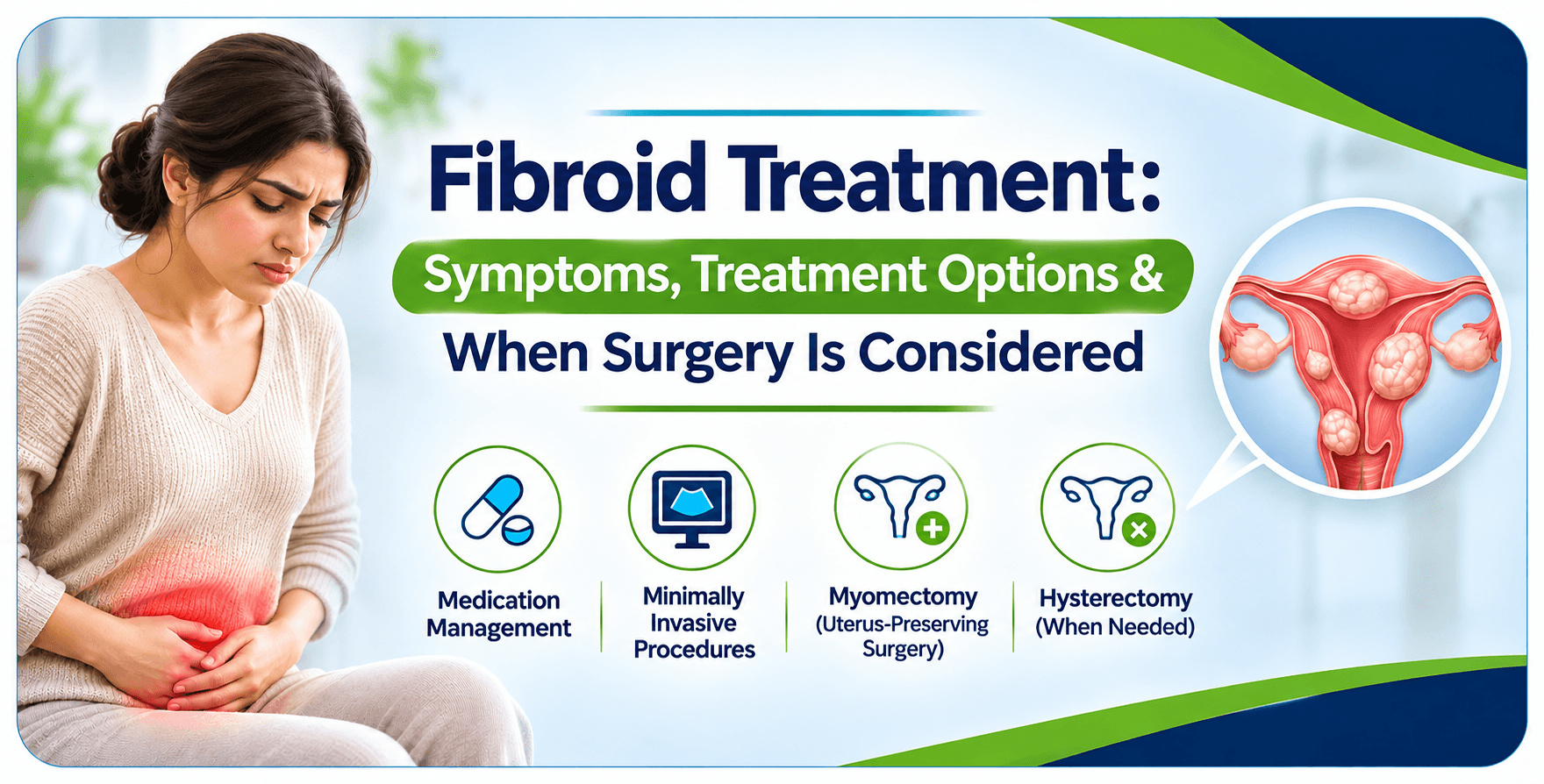
Uterine fibroids are among the most common gynaecological conditions in women of reproductive age. Many women are diagnosed incidentally — during a routine scan or investigation for an unrelated concern — and have no symptoms at all. Others experience heavy menstrual bleeding, pelvic pressure, or discomfort that significantly affects daily life.
A fibroid diagnosis does not automatically mean surgery is ahead. Treatment decisions depend on symptoms, fibroid characteristics, reproductive goals, and overall health. For some women, careful monitoring is entirely appropriate. For others, medical treatment or a procedure may be recommended. Understanding the available options helps patients ask better questions and make more informed decisions alongside their doctor.
Quick Answer — What Is the Treatment for Uterine Fibroids?
Treatment for uterine fibroids is not one-size-fits-all. Fibroids that are not causing symptoms may require no treatment beyond monitoring. Where symptoms are present, options range from medicines to manage bleeding and pain, to minimally invasive procedures, to surgery. The right approach depends on the severity of symptoms, the size and location of the fibroids, and the patient's age, health, and reproductive goals.
What Are Uterine Fibroids?
Uterine fibroids — also called leiomyomas or myomas — are non-cancerous growths that develop in or around the wall of the uterus. They arise from smooth muscle tissue and vary considerably in size, number, and location. Some are smaller than a pea; others may grow large enough to cause visible abdominal fullness.
Fibroids are extremely common. Many women develop them during their reproductive years without ever experiencing symptoms. The vast majority are benign, and the risk of a fibroid harbouring malignancy is very rare.
What differs significantly between patients is location — which largely determines whether symptoms develop and what kind they are.
Submucosal Fibroids
These grow into the uterine cavity, beneath the inner lining of the uterus. Even relatively small submucosal fibroids can cause significant menstrual bleeding and may affect the uterine cavity in ways that are relevant to fertility and implantation.
Intramural Fibroids
The most common type, intramural fibroids develop within the muscular wall of the uterus. Depending on their size and position, they may cause heavy bleeding, pelvic discomfort, or pressure, or may cause no symptoms at all.
Subserosal Fibroids
These grow on the outer surface of the uterus, projecting outward. They are more likely to cause pelvic pressure, abdominal fullness, or urinary symptoms than heavy bleeding.
Pedunculated Fibroids
A pedunculated fibroid is attached to the uterus by a narrow stalk. It may be submucosal (projecting into the cavity) or subserosal (projecting outward). Rarely, a pedunculated fibroid may undergo torsion of its stalk, which can cause sudden, severe pain and require prompt medical assessment.
What Symptoms Can Uterine Fibroids Cause?
Symptoms vary depending on how many fibroids are present, where they are located, and how large they are. Many women with fibroids have no symptoms at all.
When symptoms do occur, they may include:
- Heavy menstrual bleeding — often the most disruptive symptom, particularly with submucosal or large intramural fibroids
- Prolonged periods — bleeding lasting longer than usual, sometimes with clotting
- Pelvic pain or pressure — a sensation of heaviness or aching in the lower abdomen or pelvis
- Abdominal fullness — particularly with larger fibroids, the abdomen may appear swollen or distended
- Frequent urination — caused by pressure on the bladder
- Difficulty fully emptying the bladder — also related to bladder pressure
- Constipation or rectal pressure — when fibroids press on the bowel
- Lower back or leg discomfort — in some cases, particularly with larger fibroids
- Painful periods — dysmenorrhoea may worsen with certain fibroid types
- Discomfort during intercourse — depending on fibroid location
- Fatigue related to blood loss — persistent heavy periods can lead to iron deficiency and anaemia
Not every symptom a patient experiences is necessarily caused by fibroids. A thorough evaluation helps establish whether fibroids are genuinely responsible for the symptoms.
When Do Fibroids Need Treatment?
This is one of the most important questions — and the answer varies considerably between patients.
Asymptomatic fibroids, found incidentally, often do not require treatment. Where fibroids are small, not growing rapidly, and causing no symptoms, a watchful waiting approach with periodic monitoring may be entirely appropriate. Many fibroids remain stable for years. After menopause, as hormone levels decline, some fibroids may shrink, though the degree of change varies between individuals.
Treatment becomes relevant when:
- Menstrual bleeding is heavy enough to interfere with daily life or cause anaemia
- Pelvic pain or pressure is persistent and affecting quality of life
- Urinary or bowel symptoms are significant
- Fertility or reproductive concerns are present and investigation suggests fibroids may be a contributing factor
- Symptoms are not adequately managed by initial conservative measures
- The patient, after full discussion, prefers intervention
The decision also takes into account the patient's age, proximity to menopause, desire to preserve the uterus, and willingness to undergo different types of treatment. Two women with similar-sized fibroids may receive quite different recommendations — and both may be appropriate for their individual circumstances.
How Are Uterine Fibroids Diagnosed?
Medical History and Symptoms
The diagnostic process begins with a careful history — the nature of bleeding, the presence of pain or pressure, any reproductive concerns, and how symptoms are affecting daily life.
Pelvic Examination
A pelvic examination may reveal an enlarged or irregularly shaped uterus, suggesting fibroids, though it cannot confirm the number, size, or precise location.
Ultrasound
Ultrasound is typically the first-line imaging investigation. A pelvic or transvaginal ultrasound can identify most fibroids, assess their approximate size and location, and evaluate the uterine structure. It is widely available, non-invasive, and effective for most diagnostic purposes.
MRI
Magnetic resonance imaging provides more detailed information about the number, size, and precise location of fibroids. It is particularly useful when planning surgery or when the ultrasound findings are inconclusive. MRI is also used to assess candidacy for certain non-surgical procedures.
Additional Tests
A blood count may be ordered to check for anaemia resulting from heavy bleeding. In selected cases, hysteroscopy — a thin camera inserted into the uterine cavity — may be used to assess submucosal fibroids. Not every patient requires every test; investigations are guided by individual clinical circumstances.
In India, the evaluation and management of uterine fibroids may vary depending on the symptoms, available investigations, healthcare setting and specialist assessment. Ultrasound is commonly used to assess fibroid size and location, while further investigations may be recommended when more detailed evaluation is needed. Treatment decisions should consider the patient's symptoms, health, reproductive goals and available clinical options.
What Are the Treatment Options for Uterine Fibroids?
Fibroid treatment spans a broad spectrum, from observation to major surgery, with several options in between. The most appropriate approach depends on:
- The severity and type of symptoms
- Fibroid size, number, and location
- The relationship of fibroids to the uterine cavity
- The patient's overall health and age
- Whether the patient wishes to retain the uterus
- Fertility and pregnancy plans
- Previous treatments and their outcomes
- Patient preference after informed discussion
No single treatment is universally superior. The goal is to match the approach to the patient, not the other way around.
Fibroid Treatment Without Surgery
Many patients can be managed effectively without surgery, particularly when symptoms are moderate or when preserving options for the future is important.
Medicines for Heavy Menstrual Bleeding
Non-hormonal medicines such as tranexamic acid can help reduce the volume of menstrual blood loss. They work during the period itself, reducing bleeding without affecting hormone levels. Anti-inflammatory medicines such as mefenamic acid may also reduce both bleeding and period pain. These options address the symptom of heavy bleeding without acting on the fibroids directly — they do not reduce fibroid size.
The levonorgestrel-releasing intrauterine system (hormonal coil) is another option in selected patients, reducing menstrual bleeding through localised hormonal action. Its suitability depends on the size and position of the fibroids, particularly whether the uterine cavity is sufficiently regular to accommodate it.
Hormonal Treatment
Combined oral contraceptives and progestogen-based treatments are sometimes used to regulate the menstrual cycle and manage bleeding symptoms. These are not specific fibroid treatments but may help some patients manage symptoms adequately.
GnRH Agonists and Antagonists
Gonadotropin-releasing hormone (GnRH) agonists and antagonists are prescription medicines used in specialist settings. They work by reducing oestrogen levels, which can shrink fibroids and reduce heavy bleeding.
GnRH agonists (administered by injection) typically cause fibroids to reduce in size over several months and can significantly improve bleeding. However, the low-oestrogen state they induce causes menopausal-like side effects — hot flushes, bone density changes — which limit their use to defined treatment periods. Add-back therapy may be prescribed alongside certain GnRH treatments to help reduce side effects associated with lower oestrogen levels, such as hot flushes and bone loss. The treatment regimen and duration depend on the medication, the patient's circumstances and clinical guidance.
Oral GnRH antagonists are a more recent development. Relugolix (available in some markets in combination with low-dose oestrogen and progesterone) and similar agents work more quickly and are taken daily. They offer an alternative for women who cannot or prefer not to use injections. These medications require specialist prescription and monitoring.
An important point: when GnRH-based treatments are stopped, fibroids typically regrow. These medicines are therefore used to manage symptoms over a defined period, to reduce fibroid size before surgery, or to bridge to menopause — not as permanent solutions in most cases.
Monitoring and Supportive Management
For patients with mild symptoms, regular monitoring with repeat ultrasound at appropriate intervals allows changes to be tracked without committing to treatment. Where heavy bleeding has resulted in iron deficiency or anaemia, iron supplementation and dietary advice are relevant components of management. Patients are encouraged to report any significant changes in symptoms between scheduled reviews.
Minimally Invasive Procedures for Fibroids
For patients who want to avoid major surgery or preserve the uterus, several procedural options may be available.
Uterine Artery Embolization
Uterine artery embolization (UAE) is performed by an interventional radiologist rather than a surgeon. Using imaging guidance, tiny particles are delivered through a catheter to block the blood vessels supplying the fibroids. Deprived of their blood supply, the fibroids shrink over weeks to months, and symptoms often improve.
UAE does not remove the fibroids; it reduces them in size and decreases their blood supply. UAE is a uterus-preserving procedure and may offer a less invasive alternative to certain surgical approaches. Recovery, hospital stay and return to daily activities vary depending on the patient, the procedure and the clinical setting.
UAE is not appropriate for every patient. For women planning pregnancy, treatment options should be discussed with a gynaecologist, including the potential benefits, limitations and reproductive implications of UAE compared with other approaches. Patient selection requires specialist assessment, and in India, UAE is available at specialist centres.
Radiofrequency Ablation and Other Selected Procedures
Transcervical radiofrequency ablation uses heat energy to destroy fibroid tissue. It is performed through the cervix and does not require an incision. This approach is suitable for selected fibroid types and sizes, and candidacy requires specialist evaluation.
MRI-guided focused ultrasound surgery is another technique — using high-intensity ultrasound waves to heat and destroy fibroid tissue — available at a limited number of centres. Patient selection criteria are specific, and it may not be appropriate for fibroids of all types, sizes, or locations.
These newer approaches are not universally available across India and require careful discussion about suitability before they are considered.
When Is Fibroid Surgery Considered?
Surgery is not automatically indicated when fibroids are present. It is more likely to be discussed when:
- Heavy bleeding is not adequately controlled by medical treatment
- Anaemia is recurrent or significant despite treatment
- Pelvic pain, pressure, or bulk symptoms are persistent and severely affecting quality of life
- Urinary or bowel symptoms are significant
- The patient is planning pregnancy and there is a clinical reason to address the fibroids beforehand
- Non-surgical approaches have been tried and not achieved adequate symptom control
- The patient, after full discussion, prefers surgical management
Fibroid size alone does not determine whether surgery is necessary. A large fibroid causing no meaningful symptoms may not require removal. A smaller submucosal fibroid causing persistent heavy bleeding and anaemia may warrant earlier surgical consideration. What matters is the full clinical picture.
Types of Fibroid Surgery
Myomectomy
Myomectomy is the surgical removal of fibroids while preserving the uterus. It is the main surgical option for women who wish to retain their uterus — whether for fertility reasons or personal preference.
A key point: myomectomy removes existing fibroids, but it cannot prevent new fibroids from developing. Recurrence is possible, and the likelihood depends on factors including the original number of fibroids and the patient's age. Myomectomy also does not guarantee fertility, though it may improve the uterine environment in selected cases where fibroids are likely to be contributing to reproductive difficulty.
Hysteroscopic Myomectomy
This approach is used to remove submucosal fibroids — those projecting into or significantly distorting the uterine cavity. A hysteroscope (a thin camera with an operating channel) is passed through the cervix into the uterine cavity, and the fibroid is removed without any external incision. Hysteroscopic myomectomy is a minimally invasive approach used for selected submucosal fibroids. Recovery and outcomes depend on the size, number and location of fibroids, the procedure performed and the patient's clinical circumstances.
Laparoscopic or Robotic Myomectomy
For fibroids within the uterine wall or on its outer surface, a laparoscopic (keyhole) approach uses small abdominal incisions and camera-guided instruments to remove the fibroids. Recovery is generally faster than with open surgery, and the approach is suitable for many patients, depending on fibroid size, number, and location. Robotic-assisted laparoscopic myomectomy is available at selected centres and offers enhanced precision for complex cases.
Open Myomectomy
Also called abdominal myomectomy or laparotomy, this approach involves a larger abdominal incision. It may be recommended when fibroids are very large, numerous, or in locations that are not well accessible laparoscopically. Recovery takes longer than with minimally invasive approaches, but it allows the surgeon direct access when this is necessary.
Hysterectomy
Hysterectomy — the surgical removal of the uterus — is the definitive treatment for uterine fibroids. Because the uterus is removed, fibroids cannot recur. However, hysterectomy means the patient cannot carry a future pregnancy.
Hysterectomy may be considered when other treatments have not provided adequate relief, when symptoms are severe, or when the patient has completed her family and prefers a permanent solution. It is not the default treatment for fibroids, and it should be discussed as one option among several.
Hysterectomy can be performed via different approaches — laparoscopic, vaginal, or abdominal — depending on the clinical situation, uterine size, and surgical preference. The ovaries are not necessarily removed with the uterus; this is a separate decision.
Can Fibroids Be Treated Without Removing the Uterus?
Yes. Multiple options exist that preserve the uterus: watchful waiting, medical treatment, UAE, radiofrequency ablation in selected cases, and myomectomy.
It is worth distinguishing between uterus preservation and fertility guarantee. Preserving the uterus does not automatically mean fertility is maintained or restored. In some women, fibroids may be one of several factors relevant to fertility, and treatment addresses only the fibroid component. Individual assessment — including, where relevant, a broader fertility evaluation — provides a clearer picture.
Can Fibroids Affect Fertility or Pregnancy?
The relationship between fibroids and fertility is not straightforward. Many women with fibroids conceive without difficulty, and many fibroid pregnancies progress without complications.
The impact of fibroids on fertility and pregnancy depends significantly on their location:
- Submucosal fibroids that distort or project into the uterine cavity are most closely associated with impaired implantation and fertility concerns.
- Intramural fibroids that significantly enlarge and distort the cavity may also be relevant in some cases.
- Subserosal fibroids that do not affect the uterine cavity generally have little impact on fertility.
Where fibroids are present during pregnancy, risks such as placental complications, preterm delivery, or the need for caesarean section may be slightly increased in some situations, depending on fibroid size and location. However, most fibroid pregnancies progress normally.
Not every fibroid requires treatment before pregnancy. The decision to remove fibroids prior to attempting conception should be made based on individual clinical assessment, including fibroid type, location, the patient's history, and other reproductive factors. Removal does not guarantee pregnancy, and surgery itself carries risks that must be weighed.
What Happens If Fibroids Are Left Untreated?
For many women, fibroids remain stable over time and cause no progressive problems. Asymptomatic fibroids that are found incidentally and monitored may never require intervention.
Fibroids may shrink after menopause as hormone levels decline, although the degree of change varies between individuals. Symptoms that persist or develop after menopause should be evaluated rather than automatically attributed to fibroids. For women approaching menopause with manageable symptoms, monitoring until this natural transition may be a reasonable and appropriate strategy.
For women with symptomatic fibroids who choose not to treat them, symptom management (such as iron supplementation for anaemia) may remain possible. However, persistent heavy bleeding that causes significant anaemia, or symptoms that are genuinely affecting quality of life, generally merit at least a discussion about treatment options.
Many fibroids remain stable and do not cause significant complications. However, symptoms and fibroid characteristics can change over time, so monitoring or medical evaluation may be appropriate depending on the patient's circumstances.
When Should You Consult a Gynaecologist?
Consider arranging an evaluation if you experience:
- Heavy menstrual bleeding that requires frequent change of sanitary products or is disrupting daily activities
- Periods lasting longer than seven days
- Pelvic pain or pressure that is persistent or worsening
- Abdominal swelling that is increasing
- Frequent urination or difficulty emptying the bladder
- Fatigue that may be related to blood loss
- Difficulty conceiving after a reasonable period of trying, particularly if other symptoms are present
- Any sudden, severe pelvic pain — which warrants prompt assessment
Severe or unusual symptoms — such as very heavy bleeding that is not stopping, fainting related to blood loss, or sudden severe abdominal pain — warrant urgent medical attention rather than a routine appointment.
Frequently Asked Questions About Fibroid Treatment
Do uterine fibroids always need treatment?
No. Many fibroids cause no symptoms and require no treatment beyond periodic monitoring. Treatment becomes relevant when symptoms are affecting quality of life, when anaemia develops, when reproductive goals are involved, or when the patient prefers intervention after full discussion. Asymptomatic fibroids found incidentally are often best managed with watchful waiting.
Can fibroids be treated without surgery?
Yes. Non-surgical options include medicines to manage heavy bleeding (such as tranexamic acid), hormonal treatments, GnRH agonists and antagonists, and minimally invasive procedures such as uterine artery embolization. The suitability of non-surgical approaches depends on fibroid characteristics, symptom severity, and individual clinical factors.
What is the best treatment for fibroids?
There is no single best treatment. The most appropriate approach depends on the type and severity of symptoms, fibroid size and location, the patient's age and health, reproductive goals, and personal preference. A specialist evaluation helps identify which options are suitable for a given patient.
When is fibroid surgery necessary?
Surgery may be considered when symptoms — particularly heavy bleeding, anaemia, pain, or pressure — are significant and not adequately controlled by medical management, when non-surgical options are unsuitable, or when the patient prefers a surgical approach. Surgery is not automatically necessary based on fibroid size alone.
Can fibroids be removed without removing the uterus?
Yes. Myomectomy removes fibroids while preserving the uterus and is available via hysteroscopic, laparoscopic, or open surgical approaches, depending on fibroid type and location. Hysterectomy is not the only surgical option for fibroids.
Is myomectomy better than hysterectomy for fibroids?
Neither is universally superior. Myomectomy preserves the uterus and may be preferred by women who have not completed their family or wish to retain the uterus. However, fibroids can recur after myomectomy. Hysterectomy is definitive — fibroids cannot return — but permanently ends the ability to carry a pregnancy. The right choice depends on individual circumstances and informed patient preference.
Can fibroids affect pregnancy?
Fibroids do not automatically prevent pregnancy or cause complications. The impact depends on fibroid type, size, and location — submucosal fibroids that distort the uterine cavity are most likely to be relevant. Many women with fibroids have uncomplicated pregnancies. Individual assessment by a specialist is important when there are both fibroids and fertility concerns.
Can fibroids shrink without treatment?
Fibroids sometimes remain stable or shrink naturally, particularly around and after menopause when oestrogen levels decline. GnRH-based medical treatments can also reduce fibroid size, though fibroids typically regrow after the medication is stopped. There is no reliably effective natural remedy that has been shown to shrink fibroids.
Does every large fibroid need surgery?
No. A large fibroid that is causing no significant symptoms and is not growing rapidly may not require any intervention. The indication for treatment is symptoms and their impact on quality of life or reproductive health, not size alone.
Can fibroids come back after treatment?
Fibroids can recur after myomectomy — new fibroids may develop from remaining smooth muscle tissue. The likelihood depends on the number of original fibroids, the patient's age, and other factors. After hysterectomy, fibroids cannot recur because the uterus is removed. After UAE, some fibroid tissue may persist or new fibroids may develop over time in a small proportion of patients.
Understanding Your Fibroid Treatment Options
Uterine fibroids are common, and for most women, they are manageable. A diagnosis does not mean surgery is inevitable — or even necessary. The range of available options, from monitoring to minimally invasive procedures to surgery, means that treatment can be tailored to what matters most to each patient: symptom relief, uterus preservation, reproductive goals, or a definitive resolution.
What one patient needs may be quite different from what another requires, even if the fibroids appear similar on a scan. That is why an individual evaluation — not a general rule — is the foundation of any treatment decision.
If you are experiencing symptoms that may be related to fibroids, or if you have recently received a fibroid diagnosis and want to understand your options, a consultation at Aarogyam Surgicare can help you assess what approach is appropriate for your situation.
Ready to Discuss Your Fibroid Treatment Options?
Our specialists at Aarogyam Surgicare can help you understand which approach suits your symptoms, health, and goals — from monitoring to minimally invasive procedures to surgery.
Book a Consultation